
Why Does Your Washing Machine Smell Musty?
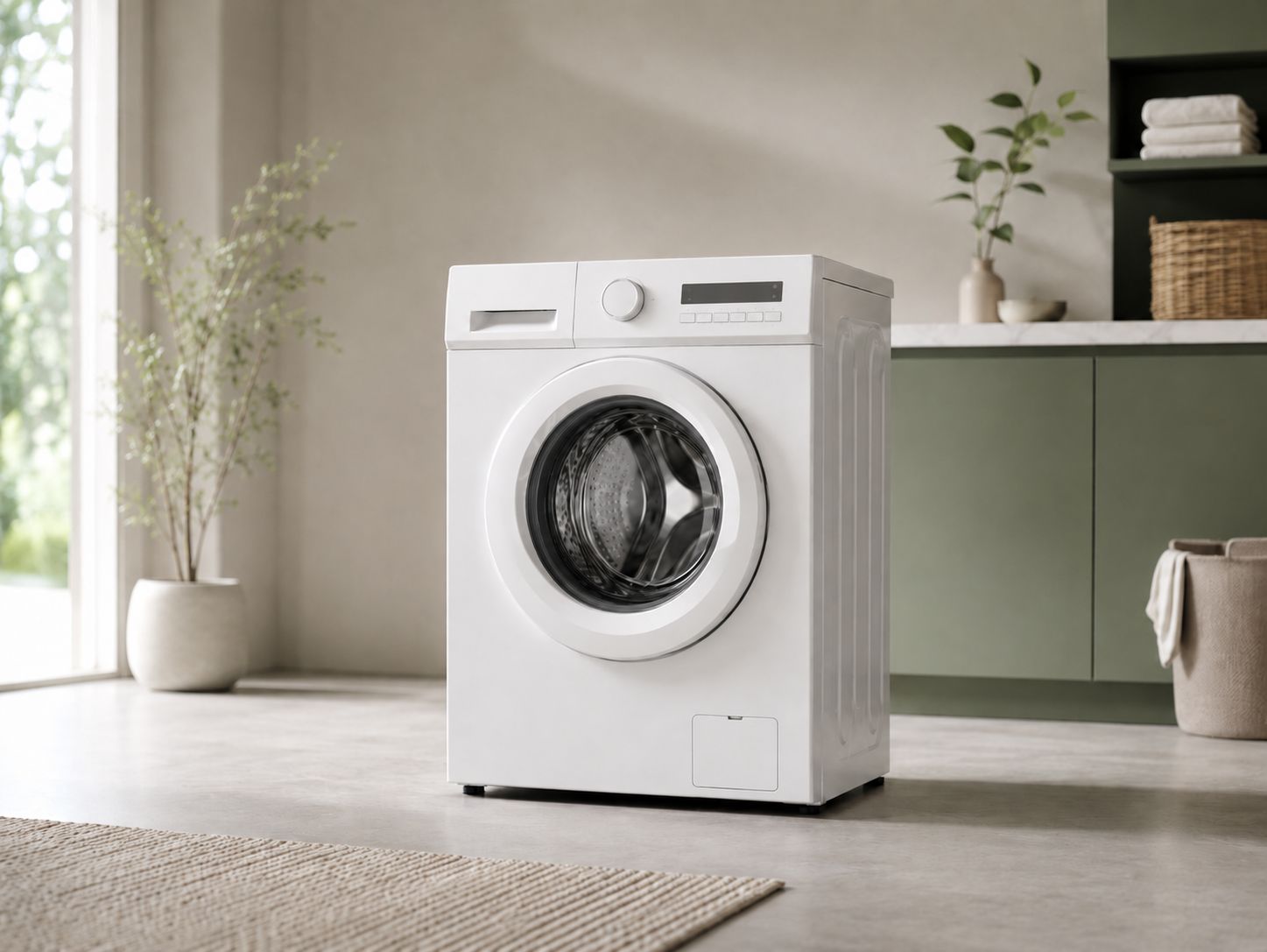
You pull a load of laundry out expecting it to smell clean, and instead you catch that unmistakable musty, sour odor. So you run another cycle. Same result. It's one of the most common calls our technicians get, and it almost never means the washer is dirty in the way people assume. What's actually happening is closer to what grows in a shower drain than anything to do with your laundry habits.
It's not dirt, it's biofilm
The smell isn't leftover grime. It's biofilm, a thin, slimy layer of bacteria and mold that forms on any surface that stays damp and gets occasional organic food. Inside a washing machine, that food comes from detergent residue, fabric softener, fibers, and skin cells that don't fully rinse away. Combine that with a dark, humid drum, and you've built the exact environment mold and bacteria need to colonize.
You'll usually find it in three places: the rubber door gasket (especially in the folds), the detergent dispenser drawer, and the outer tub, the sealed space between the drum you see and the outer shell, which is nearly impossible to inspect or wipe down by hand.
Why front-load washers are more prone to it
This is the part that surprises most people, since front-loaders are usually the more expensive, more efficient machines. That efficiency is exactly what causes the problem. Front-load washers use far less water than older top-loaders, which means less rinsing power to flush out residue. Many cycles also run on cold or warm water to save energy, which cleans clothes fine but doesn't get hot enough to kill mold spores or fully dissolve soap scum.
Then there's the door gasket itself. It's designed to create an airtight seal so water doesn't leak out mid-cycle, which is great for performance but terrible for airflow. Water pools in the folds after every wash, and if the door gets closed right after the cycle ends, that moisture has nowhere to go.
Top-load washers don't face the same combination. They typically use more water, don't rely on an airtight door seal, and the open top allows the drum to air out between loads. That's not a knock against front-loaders, it's simply a trade-off between water efficiency and self-drying design that manufacturers haven't fully solved.
The detergent trap
Here's the part that trips up even people who clean their washer regularly: using more detergent doesn't mean cleaner clothes or a cleaner machine. Standard detergent produces heavy suds, and high-efficiency (HE) front-load washers are engineered to use minimal water specifically because they need less suds to work. Pour in a regular amount of standard detergent, or too much of the HE version, and the excess doesn't fully rinse out. It clings to the drum and gasket as a soapy film, and that film is exactly the kind of organic residue biofilm feeds on.
Fabric softener adds to the same problem. It's designed to coat fibers, and some of that coating ends up coating the machine instead.
Cleaned the gasket and it still smells?
Talk to a TechnicianWhat actually helps
None of this means front-load washers are a bad choice, it just means they need a slightly different routine than the washer your parents had. A few habits make the biggest difference:
- Leave the door and detergent drawer cracked open between loads so the drum can air out instead of trapping moisture.
- Wipe down the door gasket every week or two, moisture likes to hide in the folds where you can't see it.
- Use only the recommended amount of HE detergent, more suds is not more clean, it's more residue.
- Run an empty hot-water cycle with a washer cleaner or a cup of white vinegar once a month to break down buildup that regular washes can't reach.
When the smell means something mechanical
If you've cleaned the gasket, wiped the drawer, and run a hot cleaning cycle and the smell keeps coming back, the cause may not be biofilm anymore. A clogged drain filter or pump can leave standing water at the bottom of the drum after every cycle, and stagnant water smells very different from a musty gasket, more like sewage than mildew. A cracked or improperly installed drain hose can trap water in a low point where it never fully drains either.
These aren't problems a cleaning cycle can fix. They need a technician to inspect the drain path, clear the pump filter, and check that water is actually exiting the machine at the end of each cycle.
Frequently Asked Questions
Answers to common questions about washing machine odor.
Do top-load washers get musty too?
Less often, but it can still happen. Top-loaders have more open airflow and typically use more water per cycle, which rinses residue away more effectively. Biofilm can still build up in the detergent drawer or around the tub, just more slowly.
Will a washing machine cleaning tablet fix the smell permanently?
It helps, but it's maintenance, not a cure. Cleaning tablets break down existing biofilm, but if the habits that caused it (cold washes, excess detergent, a closed door between loads) don't change, the smell typically returns within a few weeks.
How do I know if the smell is mechanical, not just buildup?
If the odor persists after cleaning the gasket, drum, and filter, or if you notice standing water at the bottom of the drum, a slow drain, or a sewage-like smell, the drain pump, hose, or filter may be clogged or failing and it's worth having a technician take a look.
Washer still smells after cleaning it?
Our licensed Los Angeles technicians can find the real cause, backed by a 90-day labor warranty.