
Why Does Your Dryer Take Forever to Dry Clothes?
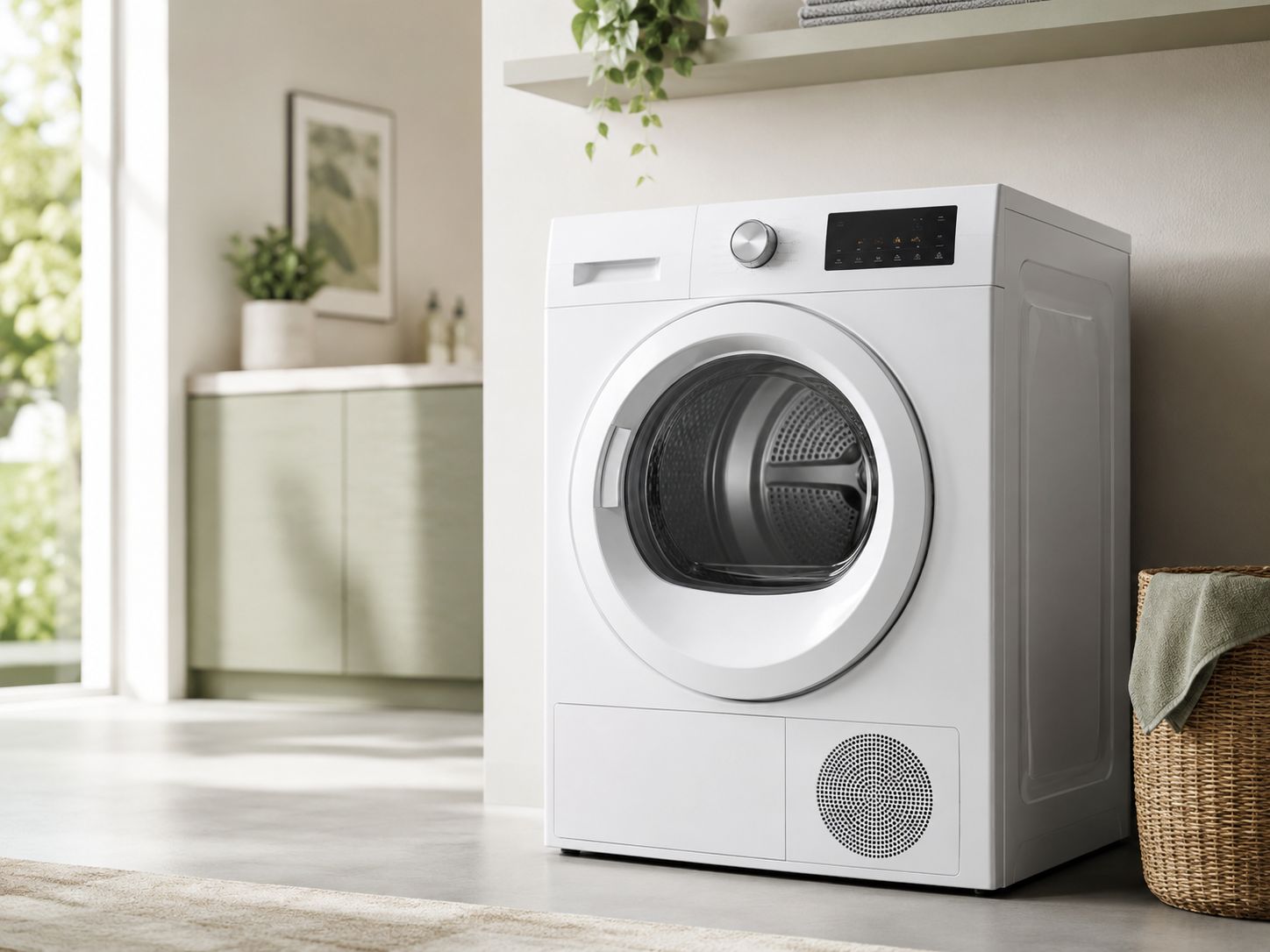
A load that used to take forty minutes now needs two full cycles, and even then some of it comes out damp. It's tempting to assume the heating element is failing, but in most cases the dryer itself is working exactly as designed. It's just not getting the airflow it needs to do its job.
Drying is airflow, not just heat
A dryer doesn't dry clothes by baking the moisture out of them. It heats the air, tumbles the load so damp fabric is constantly exposed to that warm air, and then relies on a steady stream of exhaust to carry the resulting humid air out of the machine and out of the house. Heat is only half the system. If that exhaust airflow slows down, the drum fills with warm, humid air that has nowhere to go, and clothes stop releasing moisture no matter how long the cycle runs.
This is why a struggling dryer usually doesn't fail all at once. It just needs more time, cycle after cycle, as the airflow problem quietly gets worse.
Where the lint actually collects
Most people assume the lint trap catches nearly everything, and it catches a lot, but not all of it. A fine layer of lint still passes through and travels down the exhaust duct every single load. Over months, it settles wherever the airflow slows down: at bends in the duct, around the exhaust hood outside, and anywhere the vent run isn't perfectly straight.
Because this buildup happens gradually and out of sight, it rarely announces itself. Drying time creeps up by a few minutes at a time until, months later, you're running every load twice and wondering why.
Why newer dryers hide the problem longer
Modern dryers with automatic moisture sensors are actually better at masking this issue than older timer-based models. Instead of running for a fixed time and shutting off, they keep sensing for dryness and simply extend the cycle until the load reads dry, or until a safety cutoff intervenes. That adaptive behavior is convenient day to day, but it also means a slowly restricting vent doesn't trip an obvious error. The dryer just quietly compensates, cycle after cycle, until the restriction is severe enough to cause real problems.
Running every load twice lately?
Have It InspectedSigns the vent, not the dryer, is the problem
A few patterns point to restricted airflow rather than a mechanical fault:
- Cycles that take noticeably longer than they used to, even on the same load size.
- The dryer, the exterior vent hood, or the laundry room itself feels unusually hot to the touch.
- Clothes come out hot and damp at the end of a full cycle instead of dry.
- A burning or hot-dust smell, especially early in a cycle.
- The exterior vent flap barely moves or doesn't flutter when the dryer is running.
Why this is worth taking seriously
Beyond the wasted time and energy of running extra cycles, a restricted vent forces the heating element and motor to work far harder than they're built for, which shortens their lifespan considerably. There's also a safety dimension that's easy to underestimate: lint is highly flammable, and a duct packed with it, combined with trapped heat that can't escape, is one of the leading causes of dryer fires in homes. A dryer that's simply taking longer than it used to is a signal worth acting on, not living with.
Clearing the visible lint trap is something every household should already be doing. But the deeper duct run, especially long ones, ones with several bends, or ones that pass through walls or the roof, usually needs a proper inspection and cleaning that goes well beyond what a household vacuum can reach.
Frequently Asked Questions
Answers to common questions about slow-drying dryers.
Does cleaning the lint trap every load solve the problem?
It helps, but the lint trap only catches what passes directly through it. A meaningful amount of lint still travels further down the duct and settles at bends and joints, where the trap can't reach it.
How long can a dryer vent go before it needs cleaning?
It depends heavily on vent length, how many bends it has, and how often the dryer runs, but once a year is the general guideline for most households. Longer or more twisted vent runs restrict airflow faster and may need attention sooner.
Is a slow-drying dryer actually a fire risk?
A restricted vent packed with lint is one of the most common causes of dryer fires, since lint is highly flammable and trapped heat has nowhere to go. A dryer that's taking noticeably longer to dry is worth having inspected rather than ignored.
Dryer running longer than it used to?
Our licensed Los Angeles technicians inspect and fix it fast, backed by a 90-day labor warranty.