Why Does Your Oven Temperature Run Hot or Cold?
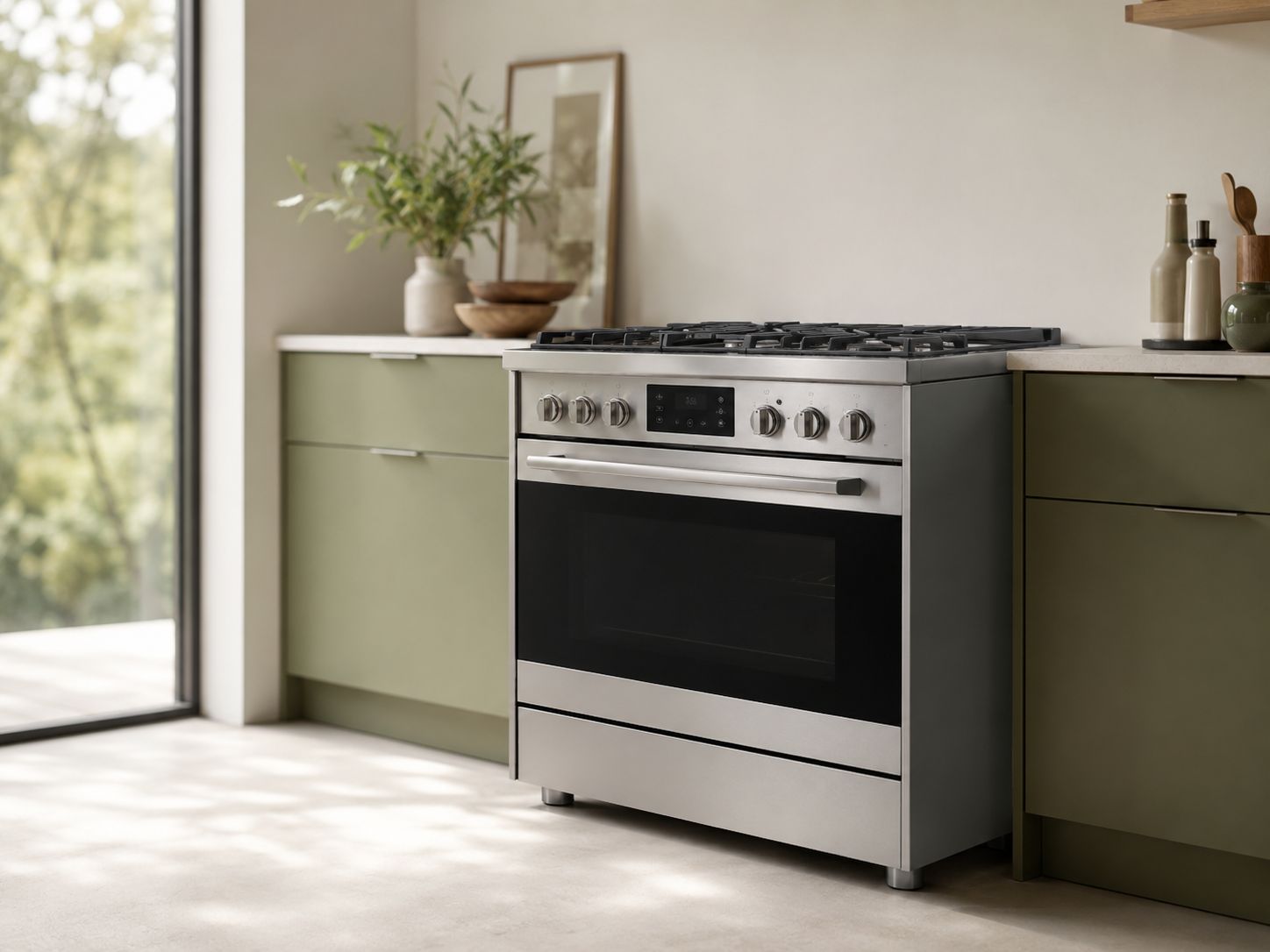
The same recipe that used to come out perfectly now needs an extra ten minutes, or comes out burnt on the outside before the middle is done. It's tempting to blame the recipe, the pan, or your own technique, but if the pattern repeats across completely different dishes, the more likely explanation is sitting right on the front panel. The number on the dial and the actual temperature inside the oven are not always the same thing.
The dial is a request, not a guarantee
When you set an oven to 350°F, you're not setting a fixed temperature, you're setting a target that a sensor tries to maintain. That sensor, usually a metal probe mounted on the back or side wall of the oven cavity, reads the surrounding air temperature and tells the heating element when to turn on and off to hover around your setpoint. If that sensor's reading drifts even slightly from reality, the oven will faithfully maintain the wrong temperature with complete confidence, cycling the heating element based on inaccurate information.
Why every oven drifts a little over time
Ovens are calibrated at the factory, but that calibration doesn't last forever. Years of heating and cooling cycles put mechanical and thermal stress on the sensor itself, gradually shifting how accurately it reads temperature. Grease and food residue that build up on or near the sensor over time can also act as light insulation, throwing off its readings without you ever seeing anything visibly wrong. A small amount of drift, five or ten degrees, is normal in almost every oven. The problem is when it becomes large enough to actually change your results.
Why loading the oven differently changes the outcome
Sensor placement matters more than most people realize. If a large baking sheet or a tall dish sits close to the sensor and blocks normal airflow around it, the sensor reads the air near itself rather than the oven as a whole, which can be noticeably different from the temperature at the center of the middle rack. This is part of why the same oven can seem to bake inconsistently depending on what's in it, and why two people using the same recipe in the same oven sometimes get different results based on how they arranged the racks.
Same recipe, different results every time?
Get It CheckedHow to tell if it's the oven and not the recipe
An inexpensive oven thermometer placed on the middle rack is the simplest way to find out. Set the oven to a common temperature, let it fully preheat, and compare the thermometer's reading to the dial after 15 to 20 minutes. If it reads consistently higher or lower across multiple attempts, and the same offset shows up regardless of what recipe you're following, that's a strong sign the oven itself, not your cooking, is the variable that changed.
When drift becomes a repair, not a quirk
A small, consistent offset is something most people learn to live with or adjust for. A few patterns suggest it's gone beyond that point and needs a technician:
- The gap between the set temperature and actual temperature is 50 degrees or more.
- Preheating takes noticeably longer than it used to for the same temperature.
- Baked goods brown unevenly on one side, which can point to an uneven heating element rather than just sensor drift.
- A digital control panel displays an error code related to temperature or the sensor.
These usually mean the temperature sensor, the thermostat, or the heating element itself needs to be tested and likely replaced, something that's straightforward for a technician to diagnose but difficult to pin down through trial and error alone.
Frequently Asked Questions
Answers to common questions about oven temperature accuracy.
How much can an oven's temperature drift before it's a problem?
A drift of 15-25 degrees is common even in a well-functioning oven and rarely affects results much. Anything beyond 50 degrees, or drift that keeps getting worse, usually points to a sensor or thermostat that needs attention.
Can I fix oven temperature drift myself?
Some ovens have a built-in offset setting in their control panel that lets you nudge the temperature up or down to compensate for minor drift. It's a reasonable fix for small, consistent differences, but it won't help if the sensor itself is failing or readings are inconsistent.
Does a self-clean cycle affect oven calibration?
It can. Self-clean cycles push the oven to extremely high temperatures, and that thermal stress accelerates wear on the temperature sensor over time, which is one of the more common reasons calibration drifts faster in ovens that self-clean often.
Baking results all over the place?
Our licensed Los Angeles technicians can test and calibrate it fast, backed by a 90-day labor warranty.