
Why Does Your Dishwasher Leave Food on Your Dishes?
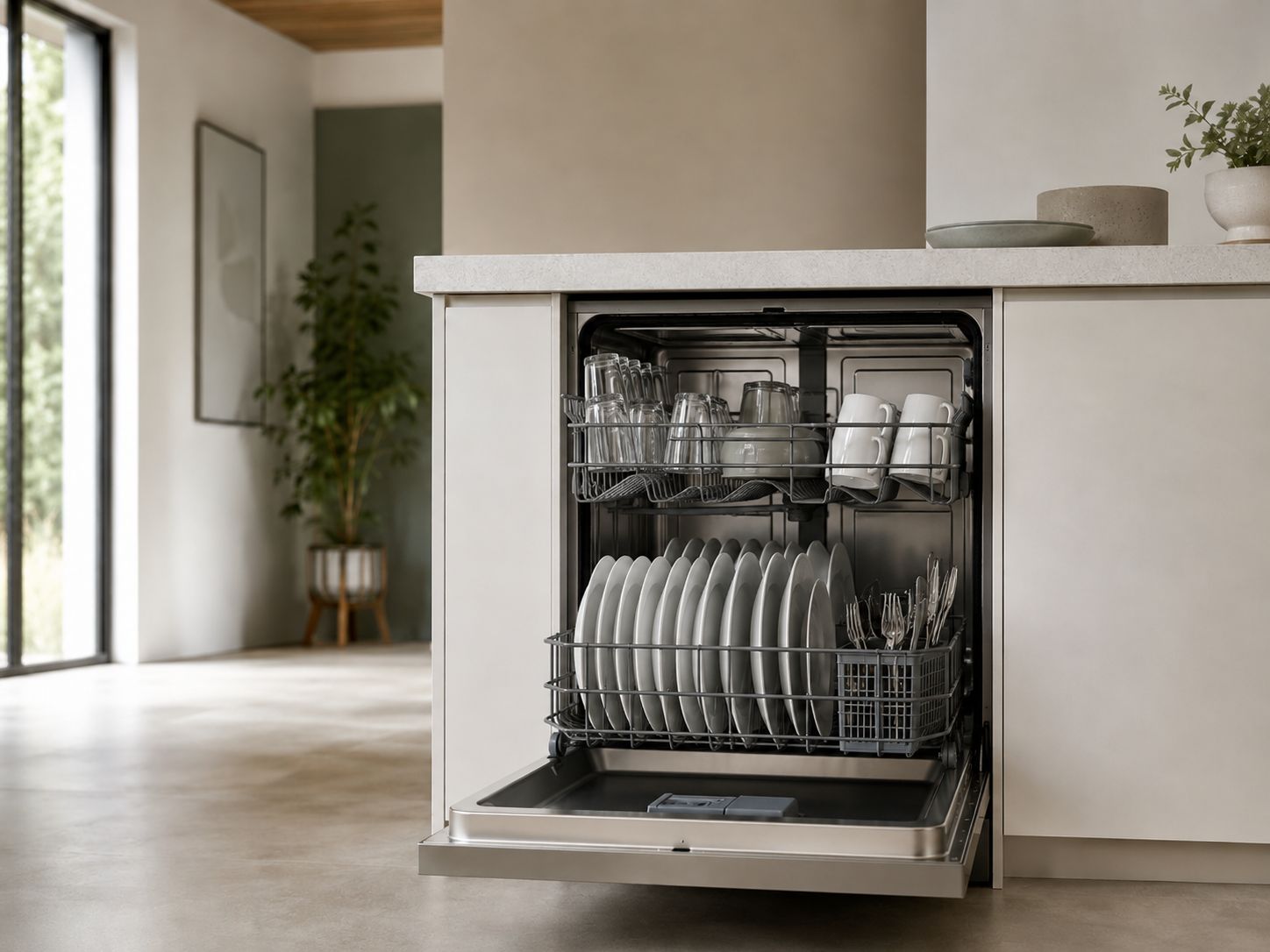
You open the dishwasher expecting spotless plates and instead find a stray piece of rice stuck to one, or a smear of sauce on another. If you grew up with an older machine that never had this problem, it's easy to assume something is wrong. In most cases, nothing is broken. Dishwashers quietly changed how they handle food years ago, and almost nobody got the memo.
It's not a broken machine, it's a design change
Older dishwashers had a small grinding blade at the bottom, essentially a garbage disposal built into the machine. Food scraps got macerated into fine particles and flushed out with the wastewater automatically. It worked well, but it was loud, used more water, and used more energy, all things that later efficiency standards specifically targeted.
To meet those standards, manufacturers phased out the built-in grinder in favor of a filtration system instead. Water now gets strained through a fine mesh filter before it recirculates, catching food particles rather than pulverizing them. It's quieter and far more water-efficient. The tradeoff is that the filter isn't self-cleaning. Someone has to take it out and rinse it, and that someone was never told this job existed.
Where this filter actually lives
On most models, it's a small cylindrical piece that sits in the bottom of the tub, usually twisting or lifting out from underneath the lower spray arm. Because older machines never required this step, it's one of the most overlooked parts of the entire kitchen. Many owners of newer dishwashers have never removed it once, sometimes for years.
Why rinsing your dishes harder doesn't fix it
A common reaction to finding food residue is to start pre-rinsing dishes more aggressively before loading them. It feels like the responsible fix, but it mostly just wastes water. The filter's job is to catch whatever residue makes it into the wash water regardless of how clean the dishes started, and once that filter is clogged, it can't do its job no matter how little food you send its way. Meanwhile, dish detergent is actually formulated to work with some food residue present, since the enzymes in it are designed to break down starches and proteins during the cycle.
Cleaned the filter and still seeing residue?
Talk to a TechnicianThe connection to cloudy glasses
A clogged filter doesn't just leave food behind, it also restricts the water pressure reaching the spray arms above it. Lower pressure means detergent and hot water don't fully reach every glass and dish, which is one of the less obvious reasons people see both food residue and a cloudy, filmy finish on glassware in the same load. It's easy to assume these are two separate problems when they often share the same root cause.
What to check before assuming it's broken
Before assuming the machine itself has failed, a couple of quick checks usually solve it:
- Pull out the lower rack and locate the cylindrical filter at the bottom of the tub, then twist and lift it out to rinse under running water.
- Check the spray arm holes for trapped debris, a toothpick works well to clear anything lodged inside.
- Make it a monthly habit rather than something you do once you notice a problem.
When it's more than the filter
If you've cleaned the filter and checked the spray arms and dishes are still coming out dirty, or the dishwasher is leaving standing water at the bottom after a full cycle, making a grinding or humming noise, or leaking, the cause is likely mechanical rather than maintenance. A failing wash pump, a clogged drain, or a heating element that isn't reaching temperature all mimic the same symptoms as a dirty filter, and they need a technician to diagnose properly.
Frequently Asked Questions
Answers to common questions about dishwasher performance.
Do I still need to rinse dishes before loading them?
Scraping off large scraps is enough. Modern detergents actually need some food residue to activate their enzymes properly, so heavy pre-rinsing can make cleaning performance worse, not better.
How often should the dishwasher filter be cleaned?
Once a month for most households is a good baseline, more often if you run the dishwasher daily or rarely scrape plates before loading them.
Why are my glasses cloudy even after cleaning the filter?
Cloudiness that survives a clean filter is usually hard water mineral film or, if it doesn't wipe off, permanent etching from years of hard water exposure. That's a water hardness issue rather than a dishwasher fault, though a failing heating element or detergent dispenser can also contribute.
Dishes still coming out dirty?
Our licensed Los Angeles technicians can find the real cause, backed by a 90-day labor warranty.