
Why Your Dishwasher Leaves Dishes Wet
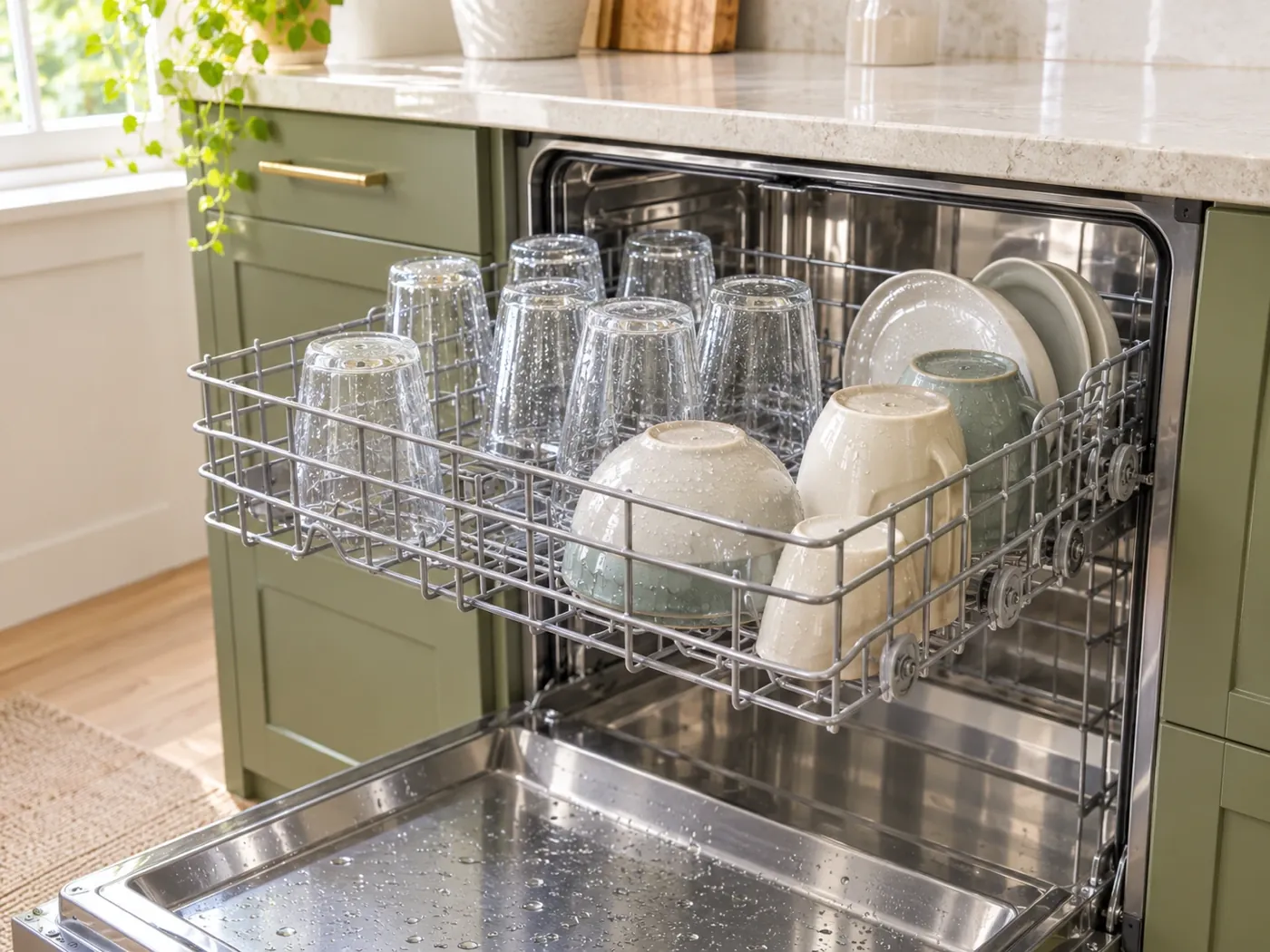
The cycle ends, you open the door, and everything is clean but dripping. Glasses have water pooled on top, plastic containers are soaked, and the bottom rack still feels damp. It's tempting to think the dryer part of the dishwasher has broken. Sometimes it has, but far more often the dishwasher is drying exactly the way it was designed to, and something small is keeping that design from working.
How a dishwasher actually dries
Older dishwashers dried dishes the obvious way: a heating element in the bottom of the tub got very hot during the final stage and baked the water off. Most dishwashers sold today don't rely on that. They use condensation drying instead. The final rinse is very hot, so the dishes heat up, and as they sit in the closed tub, steam rises off them and condenses on the cooler stainless steel walls, then runs down to the drain. Many models add a small fan or vent to move the moist air out, and some open the door a few inches at the end of the cycle to let steam escape. It's quieter and uses less energy, but it depends heavily on heat, rinse aid, and air movement.
Why plastic always comes out wet
Condensation drying works because the dishes hold heat. Glass, ceramic, and metal stay hot long enough for the water on them to evaporate. Plastic barely holds any heat at all, so it cools down almost immediately and the drops just sit there. That's why plastic containers and lids come out wet even from a dishwasher that's working perfectly. Wet plastic on its own isn't a sign of a problem. Wet glasses and plates are.
Rinse aid does more than you think
Rinse aid is the single biggest factor most people overlook. It lowers the surface tension of water, so instead of forming drops that cling to every surface, the water sheets off the dishes and runs away. In a dishwasher that dries by condensation, that makes a dramatic difference. When the rinse aid dispenser runs empty, drying gets worse gradually, so it's easy to miss. Many all-in-one detergent pods include only a small amount, which often isn't enough. Rinse aid also helps with spots and film, a problem we cover in why dishwashers leave food behind.
Dishes still soaked after the simple fixes?
Book a DiagnosisWhen the heat or fan stops working
If the dishes are cold and wet, the problem may be heat. Dishwashers heat the water with a heating element or an inline water heater, and if that part fails, the final rinse is lukewarm and nothing dries. The dishes may also come out less clean, and you may notice the cycle runs much longer as the dishwasher waits for water that never reaches temperature. A failed thermostat or temperature sensor can cause the same result. On models with a drying fan, vent, or automatic door opener, a fan motor that stops or a door that no longer pops open at the end leaves the steam trapped inside to settle back onto the dishes.
Loading and settings that trap water
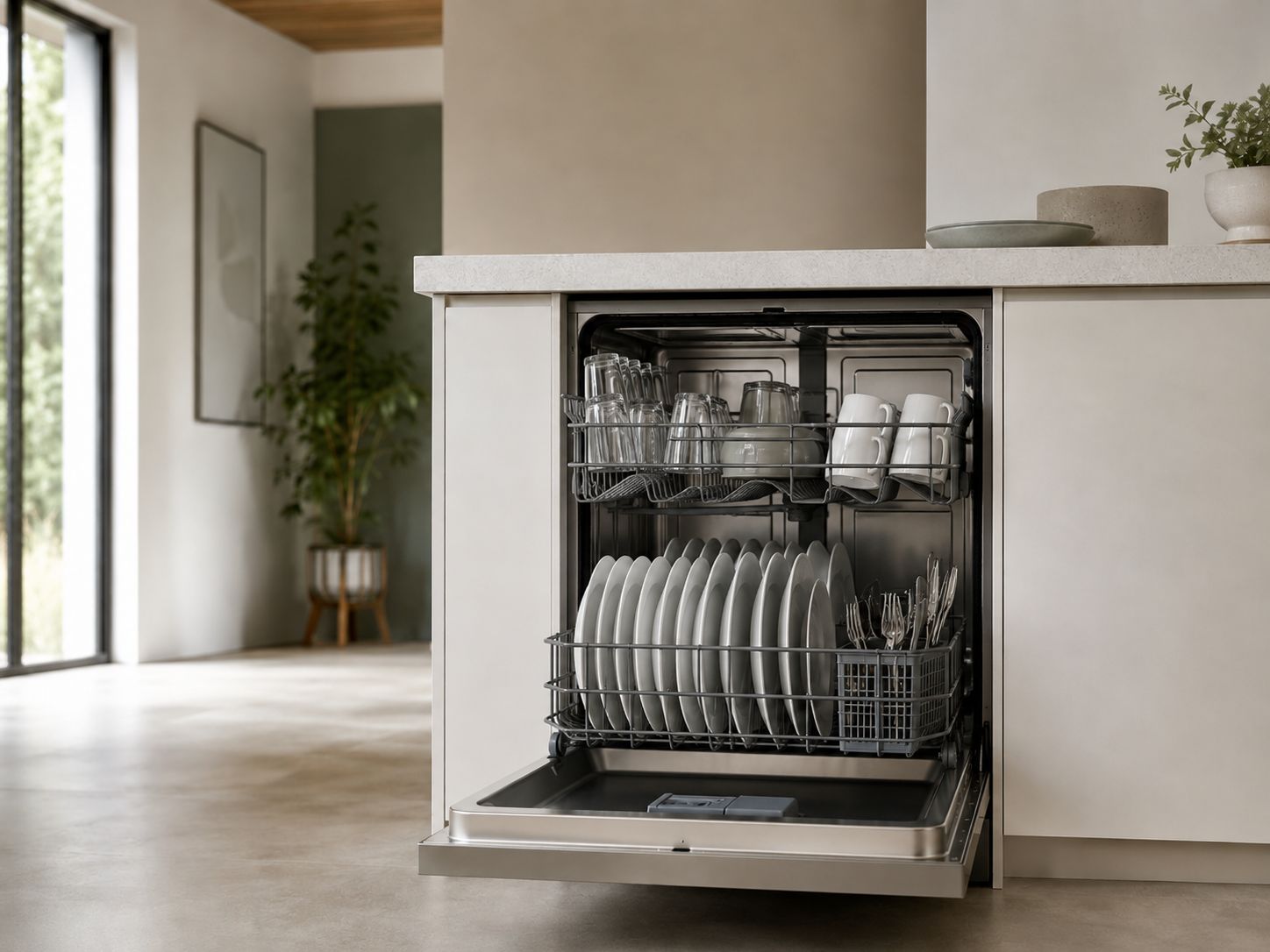
How the dishwasher is loaded matters more for drying than for washing. Bowls and cups should tilt so water runs off instead of pooling on top, and dishes need a little space between them so steam can escape. Eco and quick cycles use cooler water to save energy, and some models have heated dry or extra dry turned off by default, so check the settings before assuming a part has failed. Two simple habits help: run the hot water at the kitchen sink before starting the cycle, and unload the bottom rack first so water from the top rack doesn't drip onto dry dishes below.
When water sits in the bottom
A little moisture on the tub floor after a cycle is normal. A puddle of standing water is not. If water stays in the bottom, the dishwasher isn't draining fully, and that warm water keeps the air inside humid long after the cycle ends, so the dishes can't dry. A clogged filter, a kinked drain hose, or a blocked garbage disposal connection are the usual causes, and we explain them in why dishwashers won't drain or start.
Safe checks before you call
A few steps are safe and often useful, especially for a technician later:
- Fill the rinse aid dispenser and set it to a higher setting if the dial allows.
- Check that heated dry or extra dry is on and you're not using an eco or quick cycle.
- Run the hot water at the sink until it's hot before starting the dishwasher.
- Load bowls and cups at an angle and leave space between dishes.
- Look for standing water in the bottom and clean the filter if it's clogged.
Testing and replacing heating elements, thermostats, fans, or control boards means working with water lines and wiring under the tub, so it's best left to a technician.
Signs it needs a technician
These patterns usually mean a failed part:
- Dishes come out cold and wet, even with rinse aid and heated dry on.
- Cycles run much longer than they used to.
- The drying fan is silent or the door no longer opens at the end of the cycle.
- Water stands in the bottom of the tub after every cycle.
- Drying got worse suddenly rather than gradually.
Our dishwasher repair technicians test the heating, fan, vent, and drain together, so your dishes come out dry again.
Frequently Asked Questions
Answers to common questions about dishwashers that leave dishes wet.
Why are my dishes still wet at the end of the cycle?
Most modern dishwashers dry by condensation instead of a hot heating element, so some moisture is normal, especially on plastic. Dishes that are soaking wet usually point to an empty rinse aid dispenser, an eco or no-heat dry setting, crowded loading, or a heater, fan, or vent that has stopped working.
Is it normal for plastic to stay wet in the dishwasher?
Yes. Plastic holds very little heat, so it cools down quickly and the water on it doesn't evaporate the way it does on glass and ceramic. Drops on plastic containers are normal even in a dishwasher that's working perfectly. Fully wet glasses and plates are not.
Does a dishwasher need rinse aid to dry dishes?
Most modern dishwashers are designed to use it. Rinse aid helps water sheet off dishes instead of sitting in drops, which matters a lot in dishwashers that dry by condensation. Many manufacturers say drying results drop noticeably without it, and some all-in-one detergent pods don't contain enough to replace it.
Related Guides & Services
Dishwasher Repair
Drying, draining, leaks and more, repaired by licensed Los Angeles technicians.
Learn More
Why Won't Your Dishwasher Drain or Start?
Why water stays in the tub, and the safety checks that stop a dishwasher from starting.
Read More
Why Does Your Washing Machine Smell Musty?
How trapped moisture turns into a musty smell, and the habits that keep it away.
Read MoreDishes still coming out wet?
Our licensed Los Angeles technicians can find the real cause fast, backed by a 90-day labor warranty.