
Why Do Commercial Ice Machines Need So Much Maintenance?
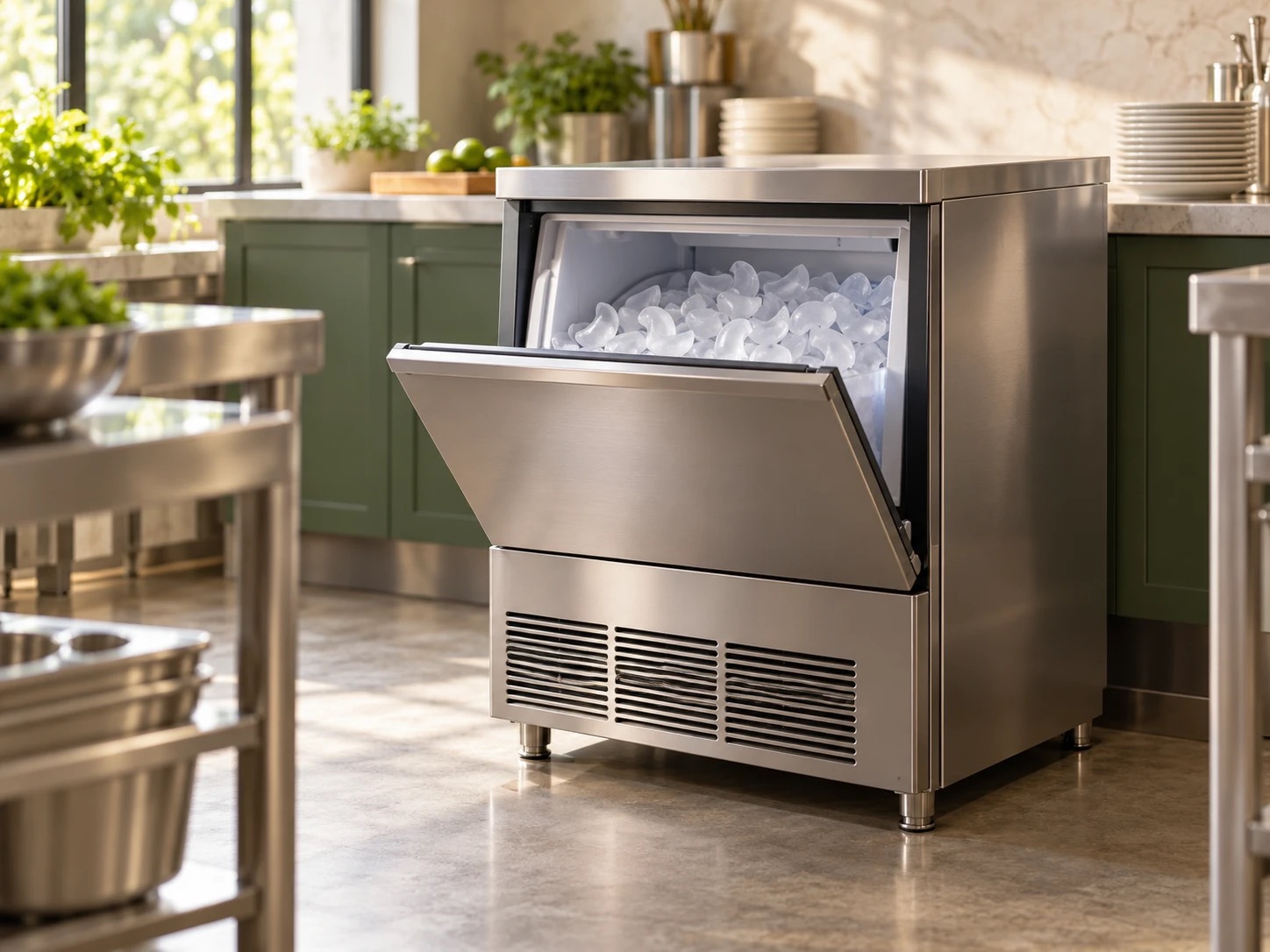
It's the middle of a lunch rush and the ice machine quietly stops producing. On paper, it's the simplest piece of equipment in the kitchen, it just freezes water. In practice, it's often one of the highest-maintenance machines a restaurant owns, and the reason comes down to how relentlessly it actually runs.
It's not just freezing water, it's freezing and releasing it constantly
A commercial ice machine doesn't make one batch and stop. Water is pumped over a freezing evaporator plate, ice forms, and then a harvest cycle warms the plate just enough to release that ice into the bin below, over and over, dozens of times a day. Each cycle is a small mechanical and thermal event, and a busy kitchen machine can run through more freeze-harvest cycles in a week than a home refrigerator's compressor cycles through in a month.
Where hard water does the most damage
Every time water freezes and then melts away during harvest, any dissolved minerals in it get left behind in a thin layer on the evaporator and nearby surfaces. In Los Angeles's hard water, that buildup accumulates fast specifically because of how often the cycle repeats. Scale insulates the evaporator plate, which makes the machine work harder and longer to form each batch of ice, and left unaddressed, it leads to smaller or misshapen cubes and a compressor straining to compensate.
The two parts almost nobody thinks about
Most kitchens remember to wipe down visible surfaces, but two components quietly do the real work of keeping the machine healthy. The inline water filter catches sediment and scale-forming minerals before they ever reach the evaporator, and it needs periodic replacement to keep doing its job. The condenser's air filter and coils need regular cleaning too, especially in a kitchen environment where grease-laden air is constantly being pulled through the unit, restricting airflow in a way that's easy to miss until the machine starts running noticeably hotter and slower.
Ice production slowing down during your busiest hours?
Request Priority ServiceWhy neglect costs more than it looks like
A dirty, scaled-up ice machine doesn't just make less ice, it creates a genuine food safety exposure. Ice is treated as a food product, and biofilm or mold growth inside the bin is exactly the kind of thing health inspectors check for during a visit. Beyond the compliance risk, restricted airflow and heavy scale buildup put ongoing strain on the compressor, which is the most expensive component in the machine to replace and the one most likely to fail outright if the smaller issues around it are ignored for too long.
Signs it needs more than a routine cleaning
A few patterns point to something beyond normal scale buildup:
- Ice production has slowed noticeably compared to a few months ago, even at the same volume of use.
- Cubes are coming out smaller, cloudy, or oddly shaped.
- The machine runs louder or hotter to the touch than it used to.
- There's a musty or stale smell coming from the bin itself.
Any of these are worth having checked before they turn into a full stoppage during service hours, which is when the cost of downtime is highest.
Frequently Asked Questions
Answers to common questions about commercial ice machine maintenance.
How often should a commercial ice machine be cleaned?
Most manufacturers recommend a full cleaning every three to six months, though kitchens with harder water or heavier daily use often need it closer to quarterly to stay ahead of scale and biofilm buildup.
Does a water filter really make that much difference?
Yes. A working inline water filter removes much of the sediment and scale-forming minerals before they ever reach the evaporator, which meaningfully slows down buildup. A filter that's overdue for replacement stops providing that protection even though the machine looks and sounds the same.
Why does the ice bin matter for food safety, not just taste?
Ice is legally considered a food product, and a bin with biofilm or mold growth is a genuine health code risk, not just a quality issue. Health inspectors do check ice machines, and a dirty bin can result in a citation even when every other piece of equipment passes.
Ice machine down during business hours?
Our licensed technicians give Los Angeles businesses priority response, backed by a 90-day labor warranty.