
Why Do Laundromat Washers Break Down So Often?
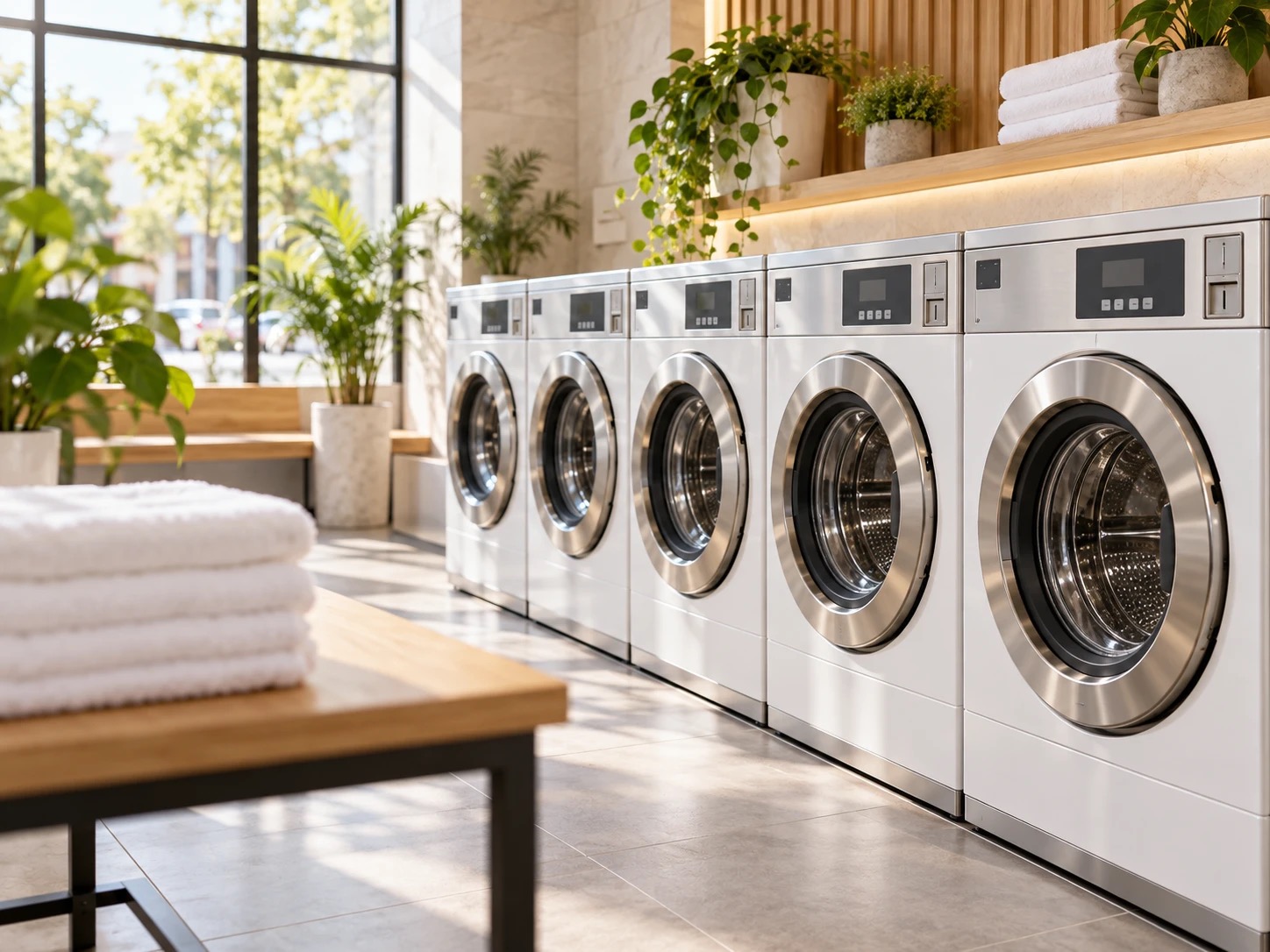
A washer at home might run a few loads a week. A washer in a busy laundromat can run a few loads before lunch. It's the same basic idea, a drum, a motor, and a pump, but the way these machines are used is so different that they wear out in completely different ways. Understanding those differences is the quickest route to fewer out-of-order signs.
A laundromat washer never gets a day off
From the moment the doors open until closing, commercial washers cycle almost continuously. Every cycle fills the drum, spins it up to speed, drains it, and locks and unlocks the door, and each of those actions puts a small amount of wear on bearings, belts, seals, and latches. A home washer accumulates that wear over years. A laundromat machine can reach the same point in a fraction of the time simply because it never rests long enough to matter.
Customers load machines in ways nobody planned for
Even the best-built commercial washer is designed around a recommended load, and real customers rarely follow it. Packing the drum to the brim, washing a single heavy comforter or rug that throws the drum off balance, or adding far too much detergent all put extra strain on the suspension, bearings, and seals. Unbalanced spins are especially hard on the machine, since the drum is rotating fast with an uneven weight pulling on it with every turn.
The drain pump takes the biggest hit
Pockets are the quiet culprit. Coins, keys, hair ties, pens, and the occasional sock slip out of laundry and end up in the drain path, where they collect in the pump and its filter. Over time that leads to slow draining, water left sitting in the drum, or an error code that takes the machine out of service. It's one of the most common reasons a washer that looks perfectly fine stops working, and it builds up gradually rather than failing all at once.
Machines going out of service more often lately?
Schedule a Maintenance VisitHard water wears down the valves
Los Angeles water is hard, and commercial machines draw a lot of it. The water inlet valves, which open and close to control every fill, gradually collect mineral scale from all that flow. As they scale up, fills get slower, valves stick, and eventually a machine either overfills, underfills, or refuses to start a cycle. Because many machines run daily from morning to night, that process moves much faster than it would in a home.
Payment systems fail too
The washer itself can be working perfectly while the coin mechanism or card reader is what's keeping it from running. Coin drops jam, readers lose connection, and a machine that won't accept payment is just as idle as one that's broken. Every idle machine is a lost cycle, which is why these small, easily overlooked parts deserve the same attention as the drum and motor.
Warning signs worth acting on early
Most failures announce themselves a little before they happen. A few signs to watch for:
- Cycles that run longer than usual, or drums that fill noticeably slower.
- Loud banging or shaking during the spin, especially with a balanced load.
- Water left in the drum after a cycle has finished.
- A door that won't lock or won't release at the end of a cycle.
- Error codes that clear on their own and then return.
- A card reader or coin slot that works intermittently.
Catching any of these early usually means a quick inspection and a small fix, instead of a machine that's out of service during your busiest hours.
Frequently Asked Questions
Answers to common questions about commercial washer maintenance.
How often should commercial washers be inspected?
For a busy laundromat, a quick monthly check of drain filters, hoses, and door latches plus a fuller inspection every quarter keeps small problems from turning into outages. Lower-volume locations can stretch that, but should still be inspected at least twice a year.
Why does a washer bang or shake during the spin cycle?
Most of the time it's an unbalanced load, such as a single heavy item like a comforter. If the machine bangs hard even with a balanced or empty drum, the cause is mechanical, usually worn suspension, shock absorbers, or bearings, and it should be checked before it gets worse.
Can damage caused by customers be prevented?
It can be reduced, though never eliminated. Clear signage about load limits and checking pockets, together with regular cleaning of drain filters, catches most of the common problems caused by overloading and foreign objects.
Washers down during your busiest hours?
Our licensed technicians give Los Angeles businesses priority response, backed by a 90-day labor warranty.