
Why Your Dryer Won't Heat Up
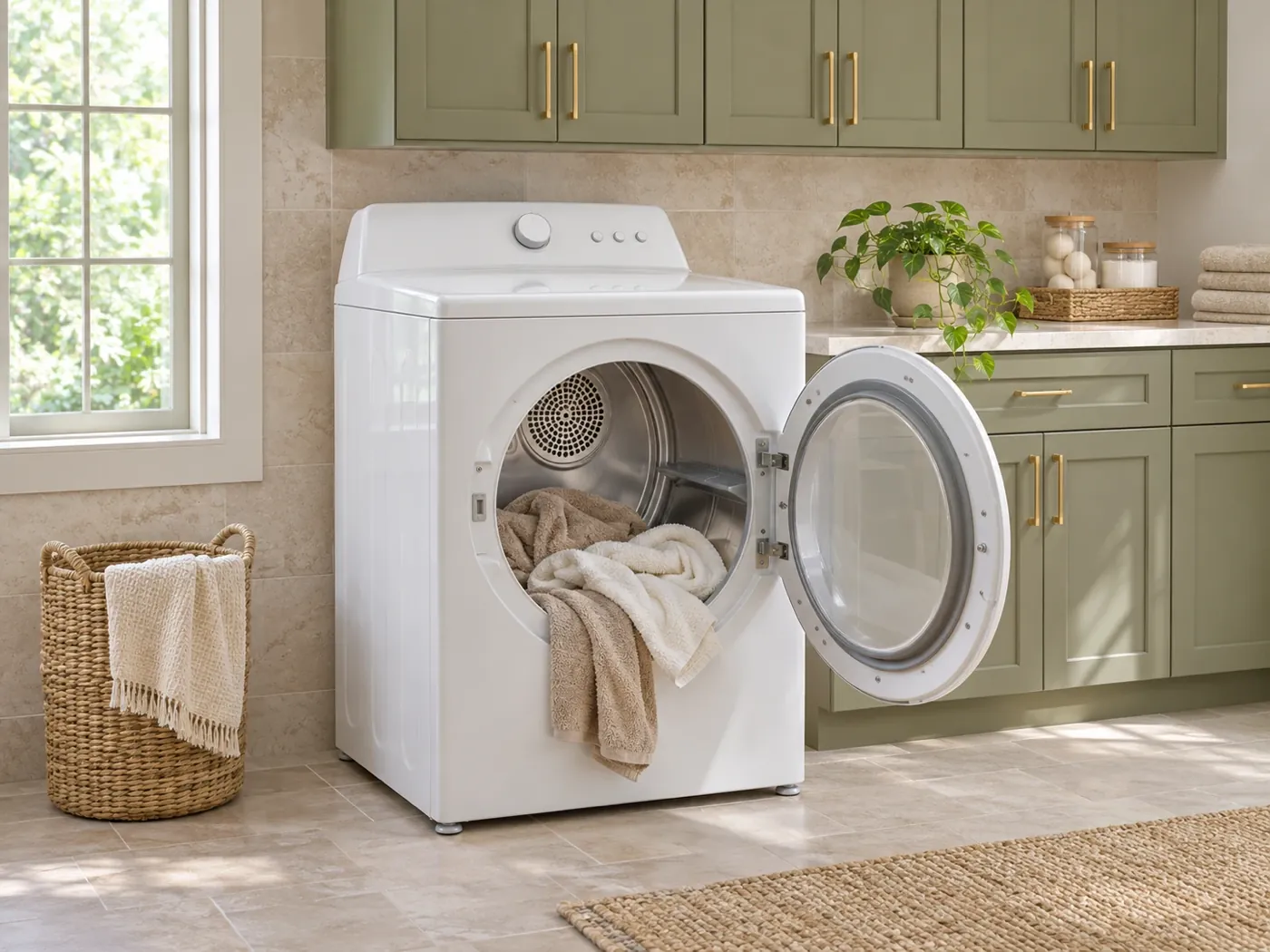
The dryer starts, the drum turns, the timer counts down, and an hour later the towels are just as damp as when you put them in. Open the door mid-cycle and the air inside feels cool. Because everything else seems to work, it's easy to assume something major has failed. In most cases, though, a dryer that tumbles without heat has lost just one link in a short chain, and the way it fails usually tells you which one.
How a dryer actually makes heat
Every dryer moves air: a blower pulls room air in, pushes it past a heat source, through the tumbling clothes, and out the vent. In an electric dryer the heat comes from a coiled heating element inside a metal housing. In a gas dryer a small igniter glows red hot, and once it's hot enough, coils on the gas valve open and a burner lights. Thermostats switch the heat on and off to hold the right temperature, and two safety parts, a high-limit thermostat and a thermal fuse, cut the heat completely if the dryer gets too hot. If the drum itself won't turn, that's a different problem with the belt and rollers, which we cover in why dryer drums won't spin.
Why the thermal fuse is so often to blame
The thermal fuse is a small, inexpensive part with an important job: when the dryer overheats, it blows and permanently shuts off the heat, or on many models the whole dryer. It doesn't reset. That makes it one of the most common reasons a dryer suddenly stops heating, but it's rarely the real cause. Fuses blow because something made the dryer run too hot, and the usual culprit is a vent packed with lint that traps heat inside the machine. We explain how that happens in why dryers take forever to dry. Replacing the fuse without clearing the vent or fixing a faulty thermostat simply sets up the next failure.
When an electric dryer won't heat
Electric dryers need two circuits at once. The motor and controls run on one leg of a double breaker, while the heating element needs both. If only half of the breaker trips, the drum keeps turning and the lights work, but the element gets no power at all. When the power is fine, the usual suspects are a heating element with a broken coil, a blown thermal fuse, or a cycling thermostat that has stopped closing. A broken element sometimes shows up as heat that stops completely after a burning smell or a pop, while a failing thermostat more often causes weak or on-and-off heat.
Clothes still damp after a full cycle?
Book a DiagnosisWhen a gas dryer won't heat
A gas dryer's heat comes in stages, which makes it easier to narrow down. If the igniter never glows, the problem is usually the igniter itself, a flame sensor, or a blown thermal fuse. If the igniter glows and then goes dark without a flame, the gas valve coils are often worn and no longer open the valve. If the flame lights and then goes out after a short time, a weak coil or a sensor problem is likely. And after a move or remodel, the gas shutoff valve behind the dryer is sometimes simply left closed. If you ever smell gas, stop using the dryer, leave the house, and call your gas company from outside.
When it heats a little, then stops
Some dryers don't lose heat completely. They warm up, then cool down, then warm again, and a normal load takes two or three cycles. This pattern often comes from the high-limit thermostat doing its job: a restricted vent lets heat build up, the thermostat trips to protect the dryer, and the heat stays off until it cools. A cycling thermostat that is wearing out can cause the same symptom. Because the same overheating eventually blows the thermal fuse, weak heat is worth checking before it turns into no heat.
Settings that look like a broken heater
Before assuming a part has failed, check the controls. Many dryers have an Air Fluff, No Heat, or Wrinkle Release setting that tumbles without heat, and it's easy to leave the dial there after refreshing a jacket. Eco and delicate settings use much lower heat, so a heavy load can come out damp. A load that's packed too tight dries poorly too, because the air can't move through it. If one of these explains it, the dryer is fine.
Safe checks before you call
A few steps are safe and often useful, especially for a technician later:
- Make sure the dryer isn't set to Air Fluff, No Heat, or a low-heat eco cycle.
- Check the breaker panel and reset the dryer breaker fully off and back on.
- Clean the lint screen and check that air blows strongly out of the outside vent.
- On a gas dryer, make sure the gas shutoff valve behind the dryer is open.
- Run a small load and note whether there's no heat at all or heat that comes and goes.
Testing and replacing fuses, thermostats, elements, igniters, or gas valve coils means opening the cabinet and working with 240-volt wiring or the gas line, so it's best left to a technician.
Signs it needs a technician
These patterns usually mean a failed part:
- The drum tumbles normally, but the air stays cold on every heat setting.
- The heat stopped right after a burning smell, a pop, or a long cycle.
- A gas igniter glows, but the burner never lights or keeps going out.
- Heat comes and goes, and loads need two or three cycles to dry.
- The dryer stopped heating again soon after a fuse was replaced.
Our dryer repair technicians test the fuses, thermostats, element or igniter, and the vent airflow together, so the heat comes back and stays back.
Frequently Asked Questions
Answers to common questions about dryers that run but won't heat.
Why does my dryer run but not heat?
When the drum tumbles but the air stays cold, the motor is working and the heat source isn't. On electric dryers the usual causes are a blown thermal fuse, a broken heating element, or half of a tripped double breaker. On gas dryers it's most often a blown thermal fuse, a worn igniter, or failing gas valve coils.
Why does my dryer's thermal fuse keep blowing?
The thermal fuse is a one-time safety part that blows when the dryer overheats. If it keeps blowing, something keeps causing that overheating, most often a lint-clogged vent, and sometimes a stuck cycling thermostat or a damaged heating element. Replacing the fuse without fixing the cause means it will blow again.
Is it safe to keep using a dryer that won't heat?
It's best not to. Running a cold dryer wastes energy, and if the heat stopped because the thermal fuse blew from overheating, the cause is often a clogged vent, which is a real fire risk. If you have a gas dryer and smell gas, turn it off, leave the house, and call your gas company from outside.
Related Guides & Services
Dryer Repair
Gas and electric dryers repaired by licensed Los Angeles technicians.
Learn More
Why Your Washer Won't Spin
Washes fine, then stops before the spin? Why a washer refuses to spin, and how to tell a safety check from a worn part.
Read More
Why Won't Your Dryer Drum Spin or Why Is It So Loud?
How the drum turns, what each noise means, and what is safe to check.
Read MoreDryer still not heating?
Our licensed Los Angeles technicians can find the real cause fast, backed by a 90-day labor warranty.